

Florida Property Insurance for Buyers in 2026: What You Need to Know Before You Close
If you’re shopping for a home in the Sunshine State, Florida property insurance for buyers in 2026 is a very different conversation than it was two years ago. After a rough stretch of carrier exits, double-digit rate hikes and tightening underwriting, the market is finally showing signs of relief. Citizens Property Insurance is cutting rates, new legislation is adding transparency, and more private carriers are writing policies again.
Relief isn’t the same as ease. Insurance can still. Break a purchase. A roof that’s too old a missing flood policy or a surprise hurricane deductible can turn a dream home into a strain. This guide walks you through the 2026 market the three coverage gaps that catch buyers, off guard the steps to take before you make an offer and the legal changes worth knowing about. By the end you’ll know what to line up before you close.

The 2026 Market Reality: Relief and Risks
The headline number for Florida property insurance for homebuyers this year is the statewide average annual premium of roughly $3,815. That’s still high compared with most of the country, but the direction of travel is encouraging. Legislative reforms aimed at curbing litigation and stabilizing carriers have started to flow through to pricing. Citizens, the state-backed insurer of last resort, has approved an average statewide rate reduction of about 8.7%, with deeper cuts of around 14% in Miami-Dade and Broward.
That said, an average doesn’t show the picture. Homes in areas and South Florida still have some of the highest costs in the country and a lower rate on a very high bill is still a very high bill. Where the home is located, how old it. How it was built matter much more, than the statewide average.
2026 Florida Property Insurance Cost & Risk Snapshot
| Region | Approx. Average Annual Premium (2026) | Primary Risk Factor |
| Statewide | ~$3,815 | Hurricanes, litigation costs |
| Miami-Dade | ~$12,200 | Hurricane wind, flood, storm surge |
| Monroe (Florida Keys) | ~$14,850 | Storm surge, direct hurricane exposure |
| Tampa Bay | Varies by zip code; get quotes | Surge and flooding on low-lying coastal land |
| Orlando | Varies; typically, below coastal markets | Wind, inland flooding, older roofs |
| Panhandle | Varies; get quotes | Major hurricane landfall exposure |
The “Big Three” Coverage Gaps
A standard Florida homeowners policy covers a lot. It leaves three gaps that surprise buyers every year. Understanding these gaps before you close is central to what Florida buyers need to know about property insurance. Many people think their policy protects them completely. That’s not always true. There are things that don’t get covered. These omissions can be costly. That’s why it’s important to know what’s missing.
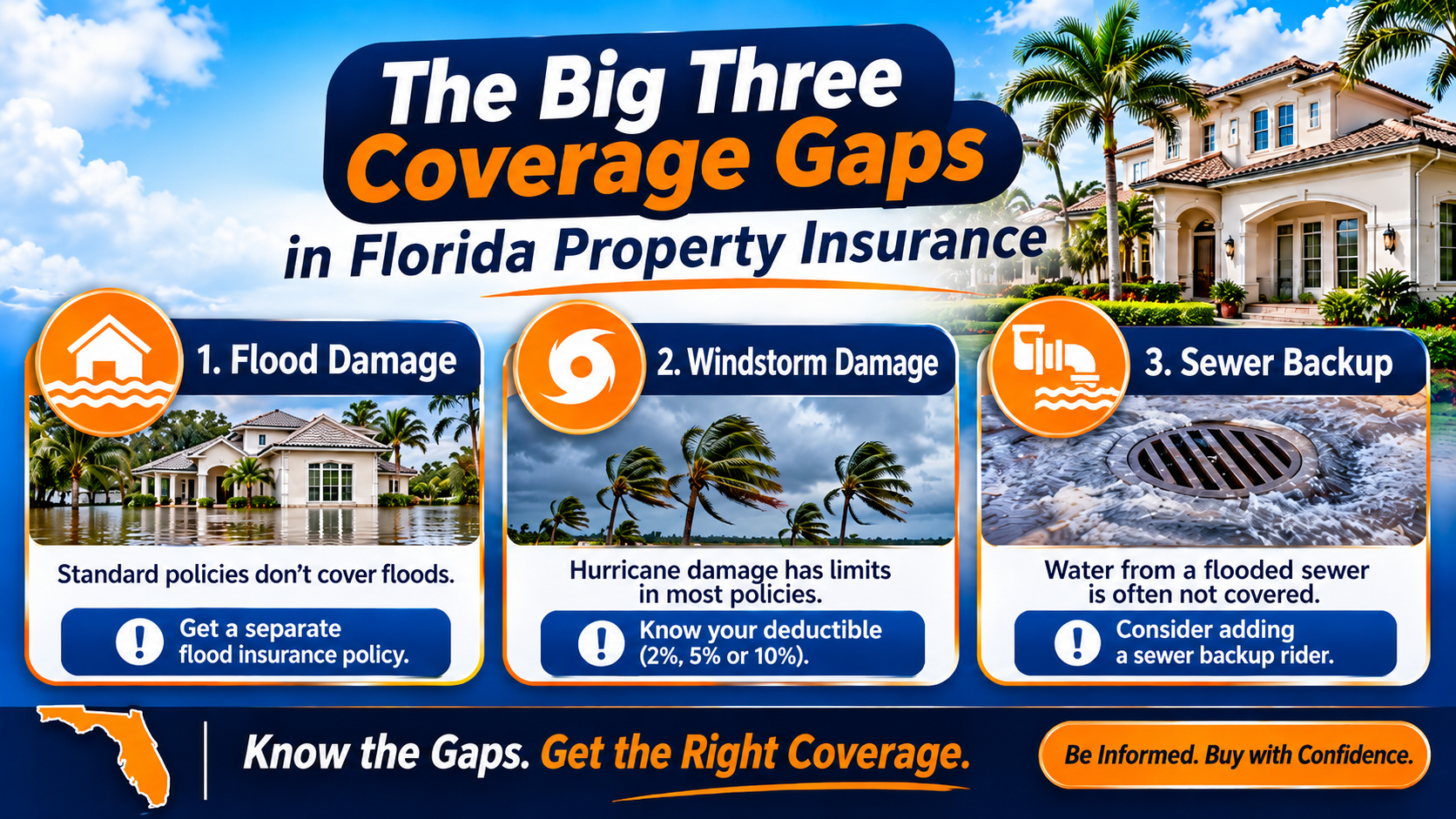
The first gap often involves flood damage. Standard policies don’t cover floods. Even if your home is near water you’re not protected unless you have a flood insurance.
The second gap is windstorm damage. In Florida hurricanes are common. Standard policies have limits on wind damage. You might need coverage for full protection.
The third gap is sewer backup. Water, from a flooded sewer can ruin your home. Most policies don’t cover this unless you add a rider. These gaps come up every year. Buyers get shocked when they learn the coverage isn’t as complete as they thought. That’s why it’s crucial to review your policy. Make sure you understand what’s included and what’s not. Talk to your agent. Ask about the gaps. Get coverage where it matters. This way you avoid surprises after you close on your home. Knowing what Florida buyers need to know about property insurance starts with seeing the picture. Don’t assume your policy covers everything. Check the details. Stay safe. Stay protected.
- Wind and Hurricane Deductibles
Most Florida policies do not use a deductible, for hurricane damage. Instead Florida policies use a percentage of your homes insured value, 2 percent, 5 percent or 10 percent. That percentage is what you pay out of pocket before coverage begins. Here is how to calculate it:- First take your coverage amount.
- Then multiply that amount by the percentage.
- The result is your out-of-pocket cost, for each hurricane event. The out-of-pocket cost is what you pay when a hurricane event occurs.
For example, a 2% deductible on a $600,000 home equals $12,000. At 5% that jumps to $30,000. A lower premium with a high percentage deductible can look like a bargain until a storm hits so ask your agent to show the dollar figure, for each option and make sure you have savings set aside to cover the deductible.
- Flood Insurance
I have seen this happen because flood damage never shows up on a homeowner’s policy. Flood coverage always shows up as a policy offered through the National Flood Insurance Program or a private flood insurer.- I have seen that lenders require flood insurance for homes in high‑risk flood zones that have a backed mortgage.
- Some carriers, such as Citizens, in situations may require flood insurance as a condition of coverage.
- Outside designated zones, a large share of Florida flood claims involves flood insurance in areas that are considered moderate or low risk.
First check the flood zone of the house early. Then ask the seller if there have been any flood claims. Finally get a flood quote with your homeowner’s insurance quote.
- Roof Age and Condition
Few factors affect insurability in Florida as much as the roof. Many carriers will decline, surcharge or restrict coverage on roofs past a certain age, often around 15 to 20 years depending on the material. Some will only offer a policy that pays depreciated value instead of full replacement cost.
For buyers that means a roof can turn into a hidden cost. A roof replacement can cost, between twenty thousand and forty thousand dollars. It’s not uncommon. You might even need to replace it before you can get an insurance policy. Make sure to ask how old the roof is and check its permit history. Get a roof inspection as part of your due diligence. Don’t forget to include the cost of replacement when making your offer or ask for a credit to help cover it.
Strategic Steps for Buyers: The How-To
The good news is that a few early moves can protect your budget and your closing date.
Start Shopping for Quotes Before You Make an Offer
Don’t wait until you are under contract. Insurance availability and price can change what you can afford and a short closing window leaves room to find coverage. Ask an agent for quotes, on the specific address, including wind and flood before you offer. If the premium makes the monthly payment unworkable you’ve learned that before you’ve committed.
Get a Wind Mitigation Inspection
Wind mitigation inspection records details that help a house resist storm. Wind mitigation inspection shows roof shape and deck attachment, roof‑to‑wall connections, opening protection such as impact windows or shutters and secondary water resistance.
Wind mitigation inspection can earn discounts of ten percent to forty percent on the windstorm part of your insurance premium. Wind mitigation inspection costs little compared with the savings. A recent report, from the seller can be used again if it is still current.
Understand Citizens Property Insurance
Citizens is Florida state-supported insurance company, designed to be an option instead of the first one people turn to.
- Citizens generally covers homes only when private carriers are unavailable or are priced significantly higher.
- Through depopulation and takeout programs, private companies can offer to take over Citizens policies, and policyholders may be moved if the private offer meets program rules.
- Citizens policies may carry specific requirements, such as flood coverage on certain properties.
If you land on Citizens at closing, treat it as a starting point and keep comparing private options each renewal.
Legislative and Regulatory Shifts in 2026
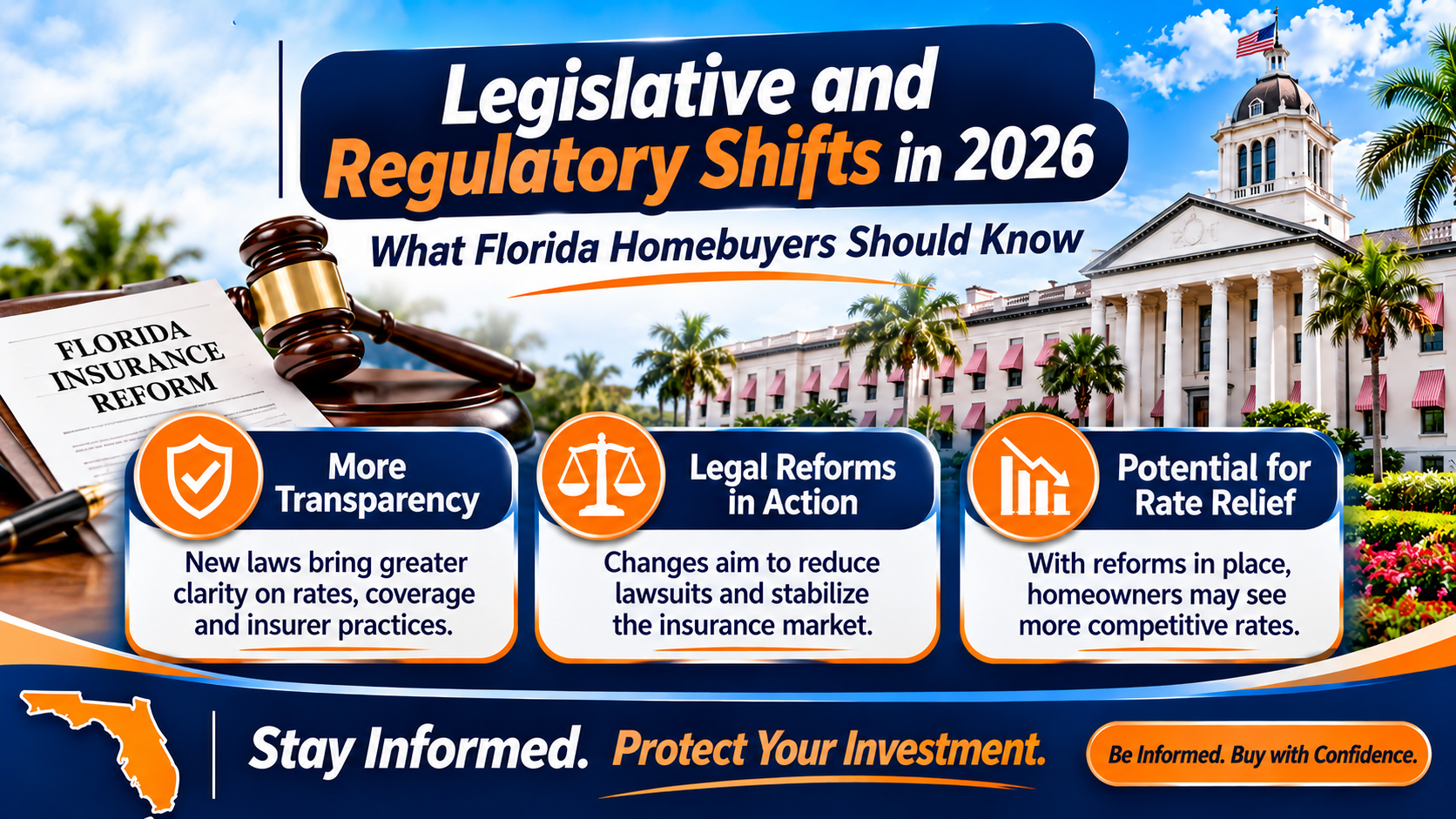
Florida’s reforms continue to shape the market, and a few changes matter directly to buyers.
- HB 767: This bill pushes for openness when insurance companies raise rates. It also makes sure that the land value is not included in the coverage calculation. That means you don’t have to pay to insure the ground your home is built on.
- Roof-age protections: The updated rules now restrict how quickly insurance companies can drop or refuse to renew policies just because the roof is older. Long as the roof is in good shape you are protected.
- Reform effects: Earlier changes to how lawsuits and claims are handled have helped insurance companies become more stable. This stability is the reason we are seeing rates, at Citizens and other providers.
Because rules and rates change, confirm current details with your agent or the Florida Office of Insurance Regulation before relying on any one provision.
FAQs
Why did the insurance quote come in much higher than the seller’s current policy?
Florida insurance transfers do not automatically lock in the seller’s rate. Underwriters re-evaluate the home based on current replacement costs, location, roof age, and your specific credit or loss history. If the previous owner had an older policy or claims history, your fresh quote will reflect current 2026 market underwriting guidelines.
What is a 4-point inspection, and will I need one?
A 4-point inspection checks the condition of the home’s roof, plumbing, electrical wiring, and heating/air conditioning (HVAC) systems. Most Florida insurance carriers require this inspection for homes that are roughly 25 to 40 years old or older. If any of these four systems are outdated or failing, carriers may deny coverage until repairs are made.
Do I need flood insurance if the house is not in a high-risk flood zone?
Yes, it is often strongly recommended or legally/contractually mandated depending on the lender. Furthermore, if you end up with a state-backed policy through Citizens, Florida mandates flood insurance for all of its policies—even if the property sits in a low-to-moderate risk Zone X. Standard homeowners insurance covers wind and rain damage from a hurricane, but water entering from the ground or storm surge requires a dedicated flood policy
When should I start shopping for property insurance during the purchase process?
Immediately after going under contract—or even during your initial browse. Do not wait until a few days before closing. Securing an actual property-specific quote early ensures your projected monthly escrow payment does not break your budget or delay loan underwriting.
Can a home “fail” a wind mitigation inspection?
No. A wind mitigation inspection cannot be failed. It is strictly used to verify wind-resistant features that qualify you for policy credits. If a home has zero hurricane protections, you simply receive a baseline score with no premium discounts, but it will not disqualify you from getting insurance like a failed 4-point inspection would.
How much money can a wind mitigation report actually save me?
In Florida, a favorable wind mitigation report can reduce your annual property insurance premium by 30% to 50%. The largest discounts are awarded for having a certified hip roof (sloping on all four sides) and 100% impact-rated opening protections (all windows, doors, and garage doors are hurricane-proof).
Can I choose to pay my property insurance directly instead of using escrow?
Most conventional and government-backed lenders (like FHA, VA, or USDA) mandate an escrow account if your down payment is less than 20%. If you put 20% or more down, you can request an escrow waiver to pay your insurance and property taxes directly, though some lenders charge a minor fee or slightly adjust your rate for this option.
Why does my lender require a “cushion” in my escrow account at closing?
Florida law and federal guidelines allow lenders to maintain a safety cushion in your escrow account—typically two months of additional premium payments. Because Florida insurance rates frequently fluctuate, this cushion prevents your escrow account from falling into a negative balance if your premium increases during the first year.
Conclusion
The market is better than it was. That is real progress for anyone navigating Florida property insurance for buyers in 2026. Improvement does not remove the need, for homework. Remember the takeaways:
Use the ~$3,815 statewide average as context, not a quote for your home.
Budget for percentage-based hurricane deductibles in actual dollars.
Buy flood coverage separately, and check the flood zone early.
Treat the roof as part of the purchase price.
Get quotes and a wind mitigation inspection before you commit.
The buyers who have a closing are the ones who consider insurance as a part of the offer not something they think about later. Speak with an independent insurance agent early preferably before you make an offer so you understand your real monthly cost before you become attached, to a house.