
The Hidden Costs of Buying a Florida Condo in 2026
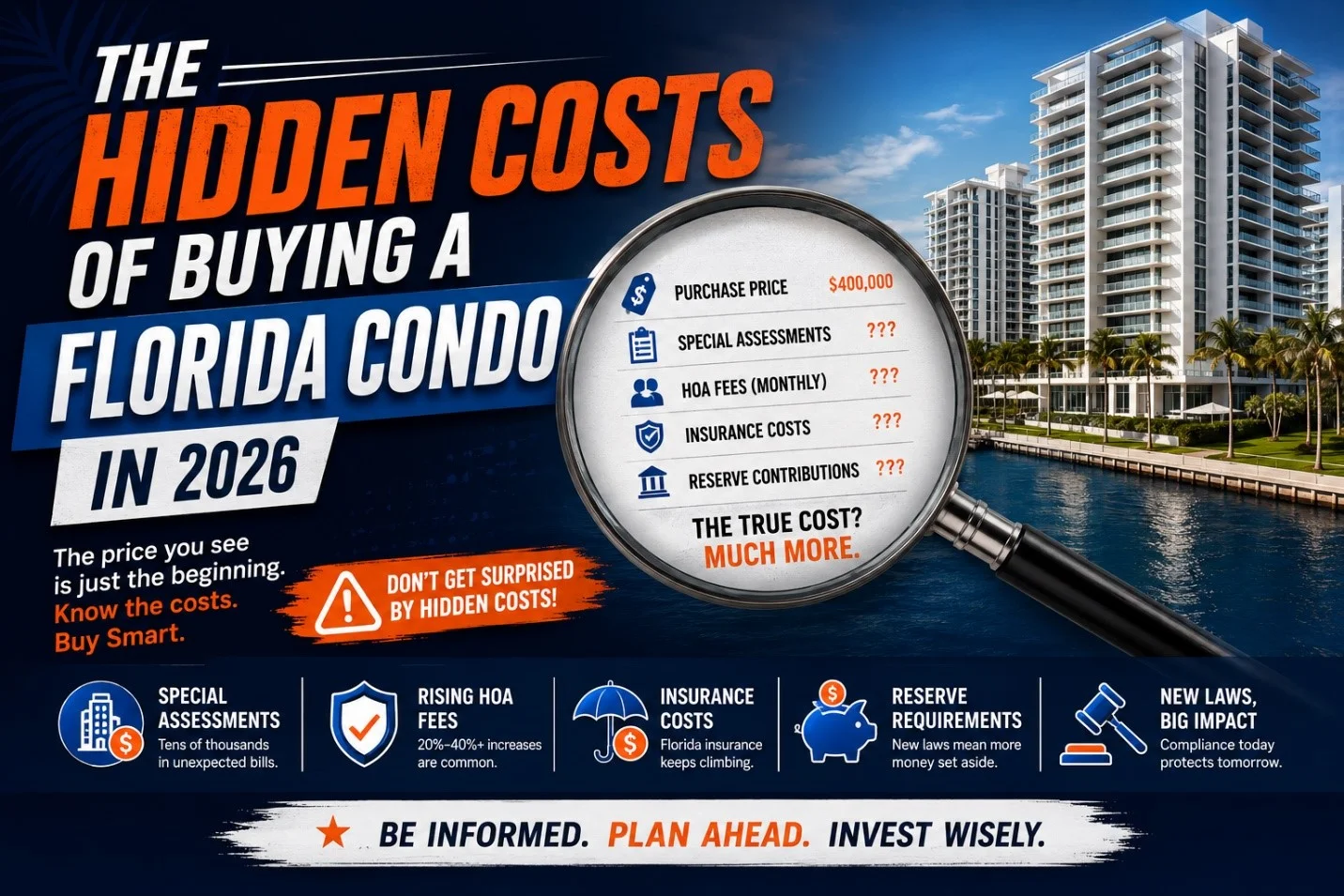
If you are thinking about the hidden costs of buying a Florida condo this year you are asking the question at the right time. The Florida condo market has gone through one of the difficult times in many years. New rules about safety for structures requirements for money in reserve funds and an insurance market that is getting more expensive have all come together to make the cost of owning a condo much higher than the number listed on the sign. For people who want to buy this means there is a chance. There are houses for sale and sellers are ready to talk. It also means that checking everything carefully is more important, than ever because the price you pay is often just the beginning.
Below I explain where the hidden costs hide. I also show what recent Florida legislation means for your wallet. Finally, I describe how buyers, sellers and investors should position themselves in today’s market.
Why Florida Condo Prices Are Falling in 2026
I have seen that condo prices across Florida’s metros have been falling for two straight years and the condo prices trend has continued into 2026. Condo prices have built up in markets such as Tampa, Jacksonville and Miami because owners are trying to avoid rising costs and buyer demand has slowed because of the same pressures. Single family homes in those metros generally keep their value much better which shows that the problem is not Florida real estate overall but condo ownership costs, in particular.
Industry analysts who track the South Florida market say the gap between what sellers want and what disciplined buyers will pay is growing, especially once buyers add assessments, insurance and reserve contributions. That growing gap is the reason why learning about the hidden costs of buying a Florida condo is not optional reading; it is essential, for anyone who wants to buy a Florida condo in this market.
The Hidden Costs Behind the Sticker Price
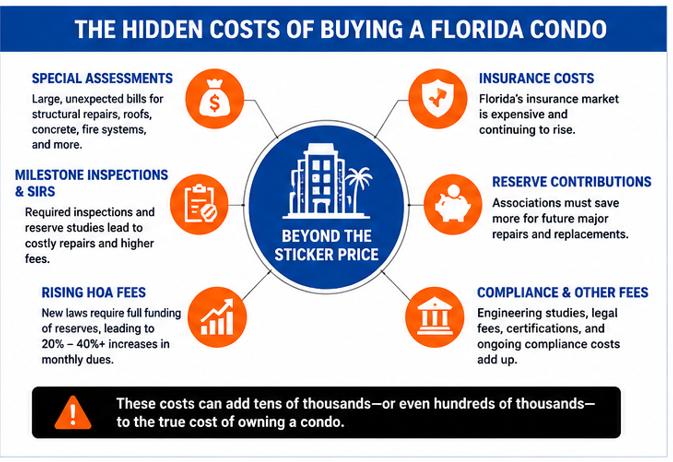
A condo’s list price only shows the unit itself. The true cost of owning a condo comes from the building – its age, its reserves, its insurance policy and its compliance, with state law. Buyers often get caught off guard by these hidden costs.
Special Assessments: The post-surf-side Reality
Since the 2021 surf side tower collapse Florida homeowner’s associations have had to deal with new rules about building safety and money. For years many buildings put off maintenance. Didn’t save enough money for future repairs. Now the time to pay has arrived. Special assessments to fix roofs repair concrete reinforce load-bearing walls and upgrade fire systems have added up. In some cases, costs have reached tens of thousands of dollars, per unit. In the situations the cost has gone into the hundreds of thousands. Your share depends on your unit’s ownership percentage listed in the condo declaration. That means a larger unit usually means a bill.
Milestone Inspections and Structural Integrity Reserve Studies (SIRS)
Under Florida Statute 553.899, condo and co-op buildings that’re three stories or taller must have a milestone structural inspection once they turn 30 years old. For buildings near the coast this happens five years earlier. At 25 years. Many of these inspections have deadlines in 2026. Now those dates are coming up fast. If a building fails the inspection or shows signs of structural deterioration repairs must begin right away. Who pays for it? Usually through an assessment.
Add to that the requirement for a Structural Integrity Reserve Study, which forces associations to set aside money to cover big-ticket items like roof replacements plumbing upgrades and structural fixes. That’s why many boards are increasing fees and sending out assessments at the same time. It’s not just about staying compliant. It’s, about keeping the buildings safe and sound.
HOA Fees That Keep Climbing
As of January 1 2026 Florida, law no longer allows associations to vote to waive or underfunded reserves for the components covered by a SIRS. That is news for long-term building safety but it means monthly HOA dues are climbing steadily as boards work reserve contributions into their budgets. It is not uncommon to see dues rise 20 to 40 percent in a budget cycle, for older buildings that were previously underfunded.
Condo Insurance Costs That Keep Rising
Florida’s property insurance market has faced a lot of pressure for years. The main reasons are hurricanes, high reinsurance costs and a long history of lawsuits. The cost of master policies, for condo associations has gone up sharply. That money is passed directly to owners as HOA dues. When you buy a condo always request the master policy declarations page and the recent renewal history. If the policy increased by 40% at the renewal it is a strong warning of what may happen next.
Financing Hurdles on Older or At-Risk Buildings
Since the surf side collapse Fannie Mae and Freddie Mac have made condo lending standards much stricter. Buildings that have deferred maintenance unresolved safety issues or insurance deductibles, above limits can be labeled “non-warrant able.” That means buyers may not be able to get a mortgage. Instead they might have to pay in cash or use non-warrant able condo loans. These loans often require down payments and come with higher interest rates. Before you write an offer talk to your lender. Confirm the building’s eligibility. It’s a step but it could save you from a deal falling apart during underwriting.
New 2026 Transparency Laws Are Giving Buyers More Protection
It isn’t all news. Florida’s HB 1021 effective January 1 2026 requires associations with 25 or more units to publish governing documents, budgets and reserve studies through a website or app. Owners now have a right to review milestone and SIRS reports within 30 days of completion. For buyers this is an upgrade. You can request access to an associations financial health before you ever make an offer. You can look at the health of an association before you ever make an offer. This is better than discovering problems after closing. This is better than finding out about issues after you have already closed on the property. This is a change for buyers. This is a change for people who are looking to buy a home. This is a step forward. This is a step, in the right direction.
What This Means for Buyers, Sellers, and Investors
For Buyers
Evaluate the building not just the unit as the product you are looking at. Ask for the three years of board meeting minutes the latest reserve study, the most recent milestone inspection results and the insurance declarations before you make an offer. A lower list price on a building that is not well funded can quickly become a more expensive purchase, than a newer building that has a good reserve and is priced higher today.
For Sellers
Transparency now works in your favor if your building is in financial shape. Sellers in associations with reserves completed milestone inspections and stable insurance history should highlight that documentation up front. Transparency is a real difference, in a market where buyers are more cautious. I see that Transparency gives you an edge.
For Investors
Falling prices and rising inventory have created entry points that did not exist two years ago in secondary Florida metros. I see that underwriting must now include reserve and insurance projections, not just current HOA dues. Buildings that are current on milestone compliance and funded reserves carry less assessment risk and tend to hold financing eligibility, both of which matter, for resale and cash flow.
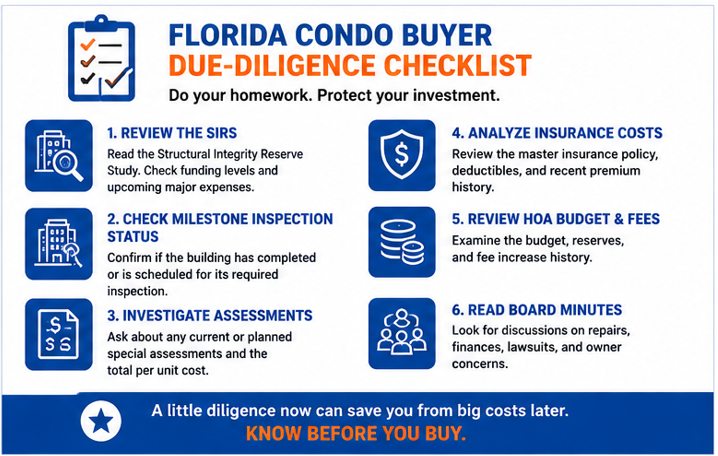
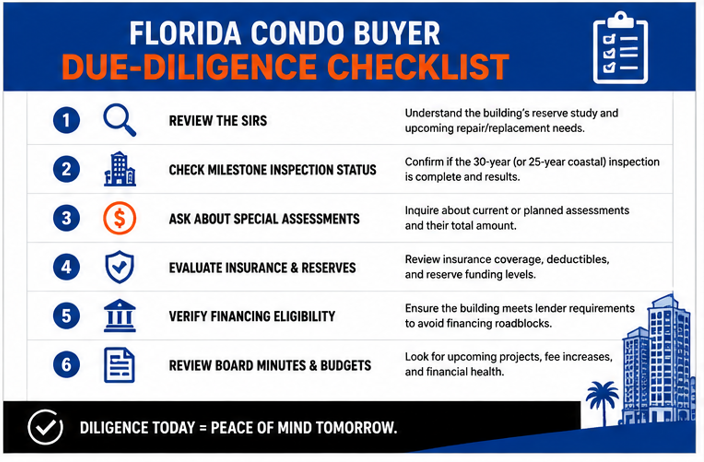
Due Diligence Checklist Before You Buy a Florida Condo
- Ask the association for the Structural Integrity Reserve Study (SIRS) and the milestone inspection report.
- Inquire if any special assessments are pending, approved or currently being discussed by the board.
- Look at the HOA budget history for the three years to find any patterns in the fee trends
- Obtain the master insurance policy declarations page and the renewal history.
- Check with your lender to confirm that the building is eligible for Fannie Mae/Freddie Mac lending.
- Go through the board meeting minutes to see if there are any maintenance or litigation issues.
- Include the monthly cost – mortgage, HOA fees, assessments and insurance –, in your affordability calculations not just the mortgage payment.
Conclusion
The hidden costs of buying a Florida condo in 2026 are real. Those costs are also more visible than in the past because new rules for transparency are in place and the market is making buildings face maintenance that has been put off for too long. Prices are. There are more condos for sale which creates a real chance for buyers who know what to look for and for investors who want to buy smart. Sellers who live in buildings that’re financially healthy can really stand out in this market. The main lesson for everyone is that the purchase price of a Florida condo is the beginning. The health of the reserve the trends, in insurance and how well the building follows the rules will decide how much a Florida condo will cost you in the future. So, do that homework before you fall in love with a view.
Ready to Find a Financially Healthy Florida Condo?
Whether you are purchasing your first Florida condo selling in a building that has good reserves or looking at investment options in today’s market that is good, for buyers having local help makes a big difference. Contact me for a custom condo check-up and a view of properties that match your budget. All the hidden costs are included.